Why Standard Corporate Icebreakers Die Instantly in a Casino Floor Environment
Dropping a mid-level management team into a high-stimulus gaming floor without a controlled engagement framework is operational suicide. The ambient noise, variable reward schedules, and sheer sensory overload of a Vegas or Atlantic City property will shred a poorly designed team building agenda before the first round of drinks lands. I have watched HR directors burn five-figure budgets on open-bar mingling sessions that produced nothing but a hangover and two resignations. The mechanics of a casino floor are engineered for individual decision-making under uncertainty, not for collaborative synergy. If your program does not explicitly hijack that reward architecture for group objectives, you are paying premium rates for chaos. 🎲
The Math Behind Structured Play: Converting Table Games into Team Diagnostics
Real operators do not rent a blackjack pit for "fun." They rent it to observe decision latency, risk tolerance, and bankroll communication under pressure. The critical variable is table minimum and bankroll allocation per team unit. A $500 collective bankroll at a $25 minimum table gives you twenty units of runway — enough to observe at least three distinct betting cycles and two stress points where a team must agree on deviation from basic strategy. That is a diagnostic window, not entertainment. USA Casino Team Building Events that ignore this calibration are just expensive field trips. You need a facilitator who reads the chip stack like a balance sheet and calls out the team that goes rogue on a soft sixteen.

Hardware and Floor Logistics: What the Venue Will Not Tell You About Group Throughput
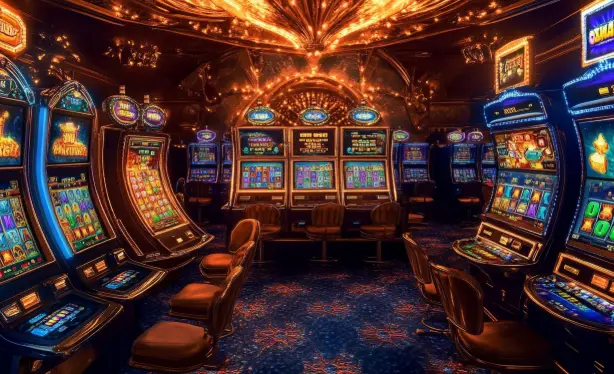
Casino sales departments will promise you a private pit for forty people and deliver a roped-off section that bottlenecks at the cashier cage. Here is the unglamorous truth: a standard craps table accommodates sixteen players maximum with functional arm clearance, and dealer rotation cycles mean your group gets roughly forty minutes of live table time per hour if you are lucky. Multiply that by three activity stations and you are looking at a two-hour window that feels like ninety minutes of waiting. Corporate groups in USA properties that book without auditing the cage-to-table transit time end up with restless executives checking their phones. Demand a dedicated cashier window and pre-counted chip racks per team. Anything less is amateur hour. ♠️
Deconstructing the Payout Narrative: Debrief Frameworks That Actually Stick
The post-event debrief is where ninety percent of these programs collapse into a fog of vague anecdotes. You need a structured after-action review tied directly to the gaming outcomes. Map every team's chip variance to a decision log — who advocated aggressive doubling, who pushed for conservative flat betting, and how the group handled a dealer hot streak that wiped forty percent of the stack. This is behavioral finance in a controlled petri dish. The teams that recover from a cold streak with disciplined unit sizing are the same teams that manage quarterly budgets without panic. If your debrief does not reference specific hands, specific verbal exchanges, and specific bankroll decisions, you have wasted the data. 🔥

Risk Containment and Compliance: The Non-Negotiable Guardrails for Corporate Groups
Every legitimate property runs group events under a strict comp and play agreement that separates promotional chips from live cash. The moment a corporate participant tries to buy in with personal funds, you have triggered a compliance flag that can shut down the entire event. Insist on house-issued promotional chips with zero cash value for all competitive segments. This is not a suggestion — it is the line between a sanctioned team exercise and a regulatory headache. The properties that handle Corporate groups at scale will hand you a pre-approved playbook; the ones that do not are running loose operations you should walk away from. Verify the chip custody chain before you sign anything.
Scaling the Format: From Twelve-Person Executive Retreats to Two-Hundred-Seat Buyouts
Scalability is where the operational math gets brutal. A twelve-person executive retreat can run a single high-limit table with a dedicated pit boss and a private dining alcove for the debrief. A two-hundred-seat buyout requires simultaneous operation of eight to ten tables, a separate registration flow, and a rotation schedule that keeps every cohort in motion without pileups at the cage. The failure point is always the transition window — the seven to nine minutes between table rotations. Multiply that by ten rotations and you have lost seventy minutes of productive engagement. Pre-stage the chip trays, pre-assign seating cards, and run a dry walkthrough with the floor manager. The properties that nail this logistics chain deliver USA Casino Team Building Events that actually scale without degrading into a cattle call. 🎰
Post-Game Financial Reconciliation: The Audit Trail Your CFO Will Demand
Every promotional chip must be reconciled against the issued manifest at the close of the event. The variance between issued and returned chips is your compliance fingerprint, and any gap above two percent triggers a mandatory review. This is not paranoia — it is standard custody protocol for any property running a sanctioned group program. Your finance team will want the reconciliation sheet attached to the event invoice, and the property's cage supervisor will want a signed acknowledgement from your on-site coordinator. The groups that skip this step are the ones that discover a discrepancy three weeks later with no paper trail and no recourse. Lock the manifest at issue, lock it again at return, and archive both.